
Introduction
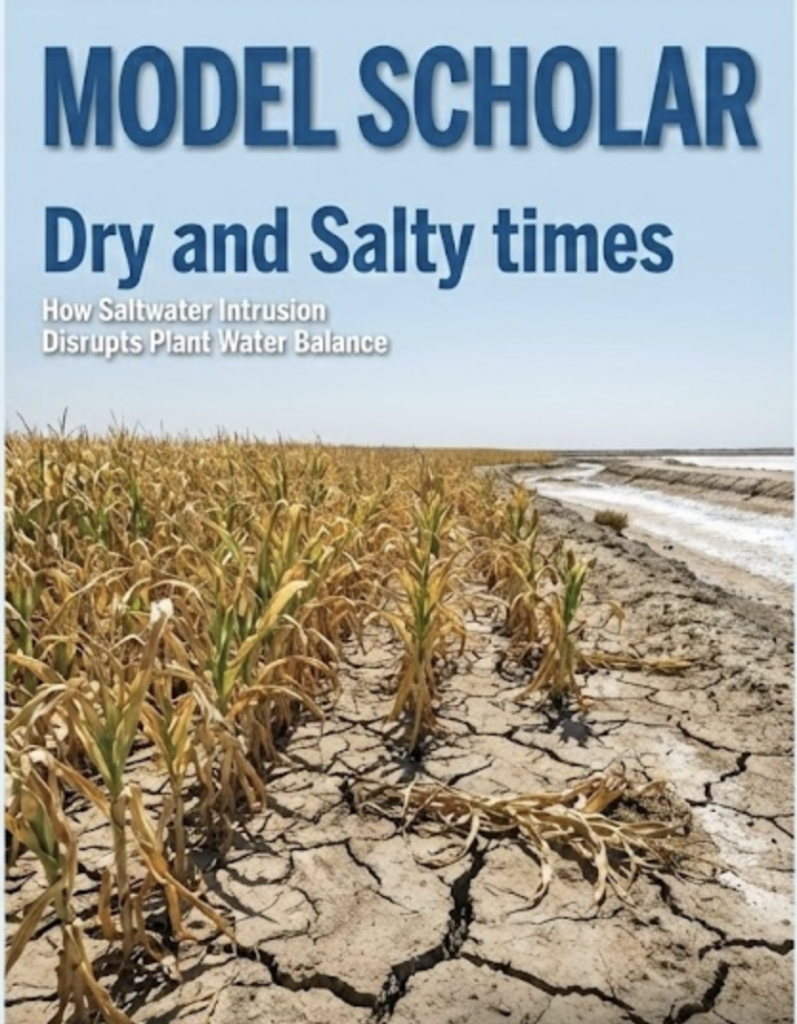
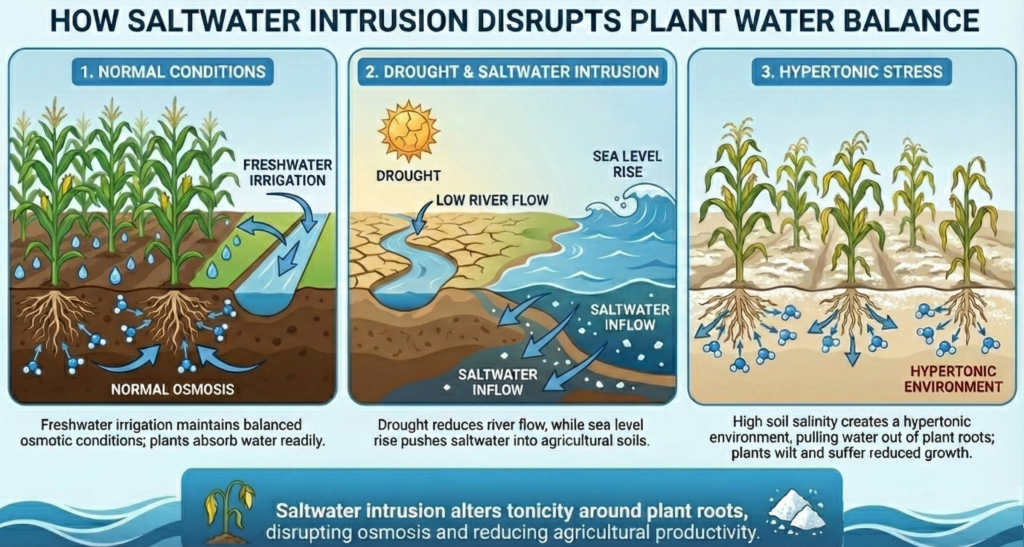
Researchers writing in PLOS Water, an open access scientific journal, examined how climate change driven saltwater intrusion is affecting coastal agricultural systems. The paper focuses on how rising sea levels, drought, and reduced river flow allow seawater to move inland, increasing soil and irrigation water salinity and threatening crop production in major food producing deltas.
Conceptual Infographic
Methods
The authors analyzed historical salinity records, river discharge data, climate trends, and land use patterns in multiple coastal agricultural regions. Case studies included the Po River Delta in Italy and the Mekong Delta in Vietnam. The analysis combined field measurements, remote sensing, and hydrologic data to determine how freshwater availability and salinity levels change under drought conditions and sea level rise.
Results
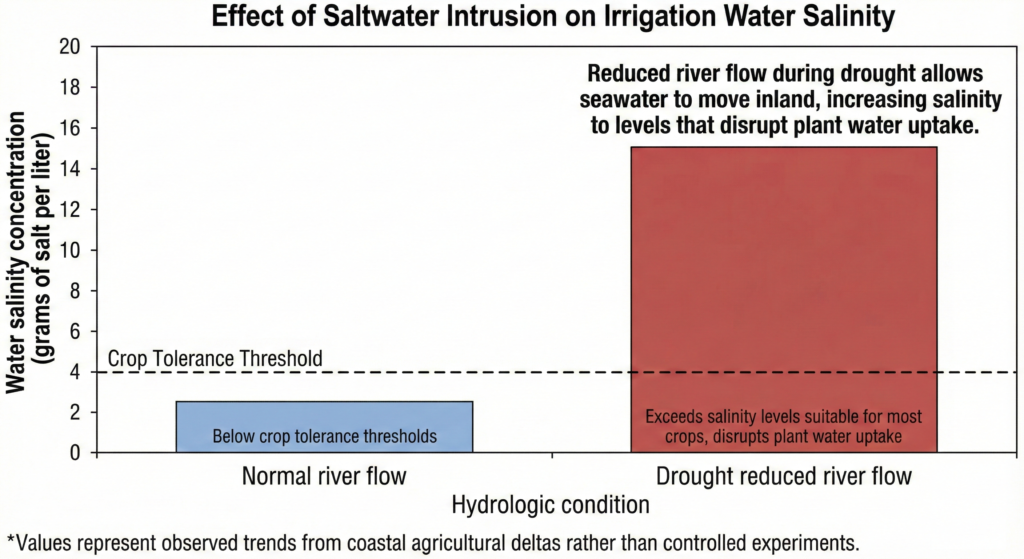
The study found that saltwater intrusion has intensified in coastal farming regions as river flow decreases and sea levels rise. During drought conditions, salinity levels in irrigation water exceeded thresholds that crops can tolerate, leading to reduced water uptake by plant roots, soil degradation, and lower crop yields. In some regions, saltwater was observed hundreds of kilometers inland, placing staple crops such as rice at risk.
Data Visualization
Discussion
The authors conclude that saltwater intrusion poses a serious threat to global food security. Increased salinity disrupts plant water balance, reduces agricultural productivity, and forces farmers to abandon or modify cropland. The paper emphasizes the need for adaptation strategies such as improved freshwater management, salinity tolerant crops, and restoration of natural river flow to protect coastal agriculture under climate change.
Key Vocabulary and Definitions
Salinity: The concentration of dissolved salts in water or soil.
Osmosis: The movement of water across a membrane from higher free water concentration to lower free water concentration.
Tonicity: The ability of a surrounding solution to cause cells to gain or lose water.
Osmoregulation: The regulation of water and solute balance within cells and organisms.
Curriculum Connections
Learning Objectives
- 2.7.A Explain how the movement of molecules across a membrane is influenced by the properties of the molecules and the membrane.
- 8.2.B Describe the role of energy transfer in an ecosystem.
- 8.7.C Explain how human activities affect ecosystem dynamics.
Essential Knowledge
- 8.2.B.2 Energy is transferred through food webs in ecosystems.