Introduction
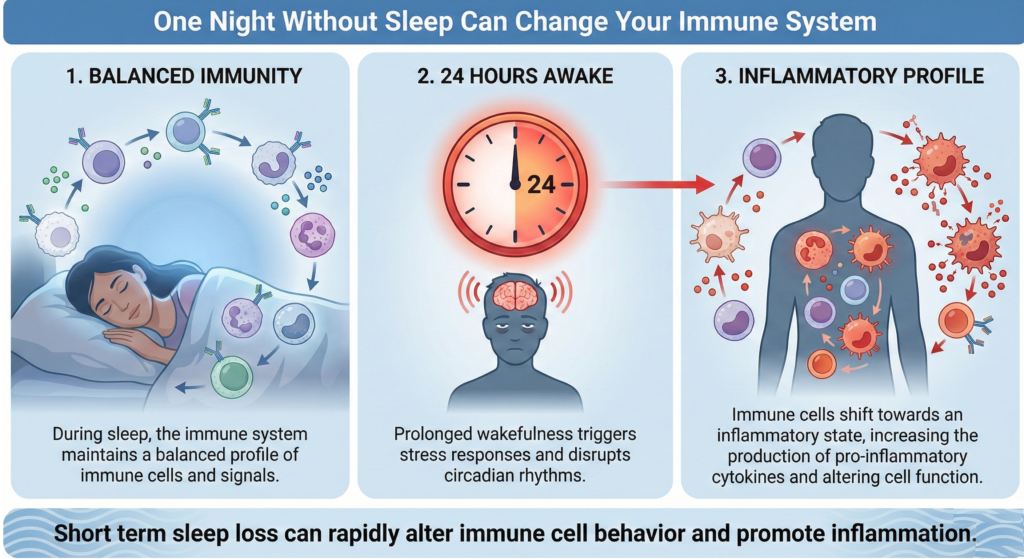
New research shows that even a single day without sleep can change how the immune system functions and increase inflammation in the body. Inflammation is linked to long term health problems such as heart disease, diabetes, and obesity. This study suggests that sleep is not just important for energy and focus, but also for maintaining immune balance.
Conceptual Infographic
Methods
Researchers studied 237 healthy adults with a range of body mass indexes and sleep habits. Participants reported their sleep quality, and blood samples were analyzed to measure immune cell types and inflammation markers. In a smaller experiment, five healthy individuals stayed awake for 24 hours, and their blood was analyzed before and after sleep deprivation to observe short term immune changes.
Results
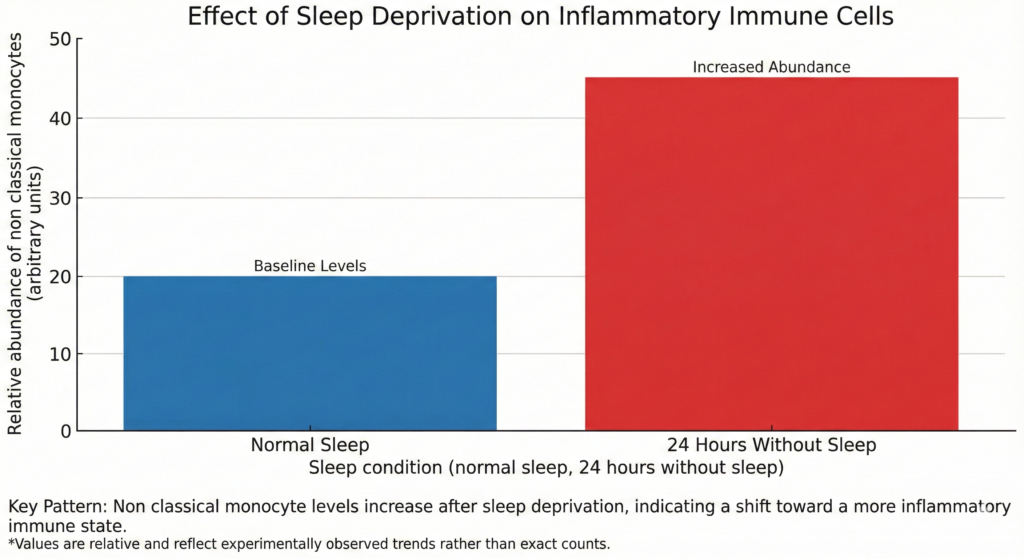
People who reported poorer sleep quality showed higher levels of inflammation and changes in immune cell populations. After just 24 hours without sleep, participants experienced a shift in monocytes toward a more inflammatory profile. In particular, levels of non classical monocytes increased, a pattern commonly associated with chronic inflammatory conditions.
Data Visualization
Discussion
The findings demonstrate that the immune system is highly sensitive to sleep. Even short term sleep loss can push immune cells into a state associated with disease risk. Over time, repeated sleep deprivation could contribute to chronic inflammation and long term health problems. The study highlights sleep as a key factor in maintaining immune homeostasis.
Key Vocabulary and Definitions
Inflammation: A biological response to stress or injury that can become harmful when prolonged.
Monocytes: A type of white blood cell involved in the innate immune response.
Non classical monocytes: A subtype of monocytes that patrol blood vessels and are associated with inflammatory signaling. Sleep deprivation: A condition in which an individual does not get sufficient sleep, in this study defined as 24 hours without sleep.
Curriculum Connections
Learning Objectives
- 4.4.A Describe the role of checkpoints in regulating the cell cycle.
- 8.1.A Explain how environmental factors affect organism behavior.
Essential Knowledge
- 4.4.A.1 Checkpoints monitor and regulate the cell cycle.
- 8.1.A.1 Organisms respond to environmental stimuli through behaviors that increase survival and reproduction.