
Introduction
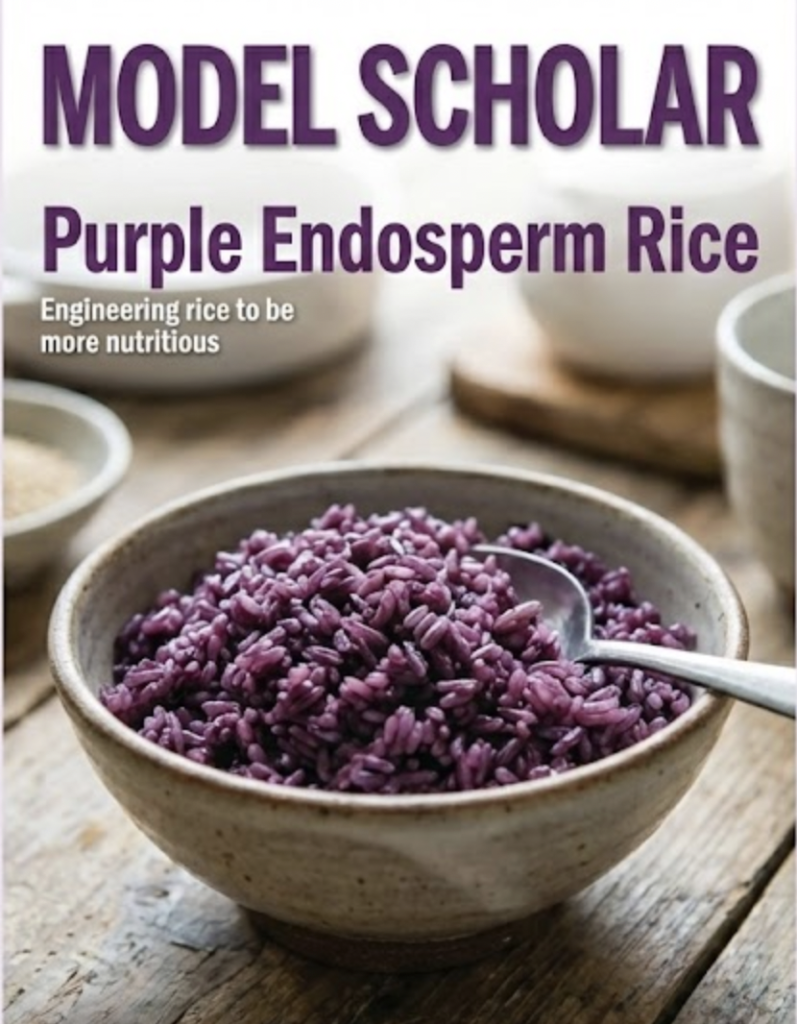
In a 2017 study published in Molecular Plant, researchers tackled a nutrition problem. Polished white rice lacks anthocyanins, purple pigments that act as antioxidants. These compounds may help prevent cancer and heart disease. Some rice has anthocyanins, but only in outer layers removed during processing. Can we make rice produce these pigments in the part people eat?
Conceptual Infographic
Methods
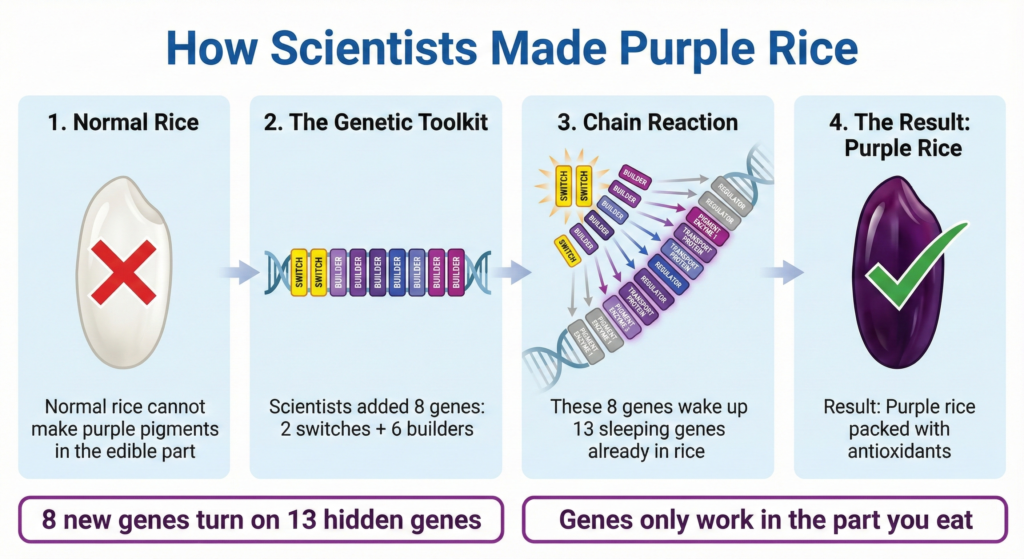
Scientists at South China Agricultural University created a genetic tool called TransGene Stacking II to insert multiple genes at once. They added eight genes to rice: two switch genes from corn and six pigment-making genes from Coleus plants. Special promoters made sure these genes only turned on in the edible part of the grain.
Results
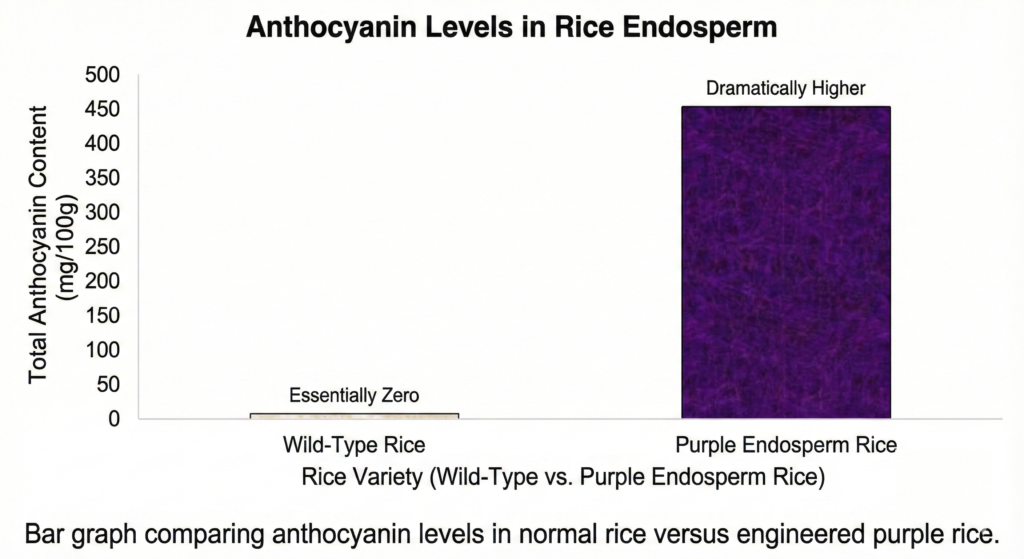
The engineered rice turned purple. The eight new genes activated 13 more genes that were already in rice but normally silent. This created high levels of anthocyanins with strong antioxidant activity. Scientists named it Purple Endosperm Rice or Zijingmi in Chinese.
Data Visualization
Discussion
This is the first time scientists engineered such a complex pathway in plants. The technique could help create other nutrient-rich crops. Researchers plan to test if purple rice is safe to eat and try the same approach in corn, wheat, and barley.
Key Vocabulary and Definitions
Endosperm: The starchy inside of a seed; the white part of rice people eat.
Transgene stacking: Adding multiple genes to an organism at the same time.
Promoter: A DNA switch that controls when and where a gene turns on.
Biofortification: Making crops more nutritious through genetic changes.
Curriculum Connections
Learning Objectives
- 6.5.A Describe the types of interactions that regulate gene expression.
- 6.6.A Explain how the binding of transcription factors to promoter regions affects gene expression and the phenotype of the organism.
- 6.8.A Explain the use of genetic engineering techniques in analyzing or manipulating DNA.
Essential Knowledge
- 6.5.A.1 Regulatory sequences are stretches of DNA that interact with regulatory proteins to control transcription.
- 6.6.A.1 RNA polymerase and transcription factors bind to promoter or enhancer DNA sequences to initiate transcription.
- 6.6.B.1 Gene regulation results in differential gene expression and influences cell products and functions.
- 6.8.A.1 Genetic engineering techniques can be used to analyze and manipulate DNA and RNA.